Warm Transfers vs Voicemail Drops: What Actually Gets an Insurance Prospect on the Phone
Voicemail drops feel productive and cost almost nothing. Warm transfers feel expensive and interrupt your day. Only one of them reliably puts a licensed agent in front of a prospect who is ready to talk.

There is a version of lead follow-up that looks busy and produces almost nothing. You blast a few thousand voicemail drops, a handful of people call back, and the report at the end of the week has big numbers on it. Meanwhile the leads that were actually ready to buy went cold because nobody was on the phone with them at the moment they were ready.
I ran both plays while building my own book. Here is the honest comparison.
The short version
- A voicemail drop moves the work to the prospect. A warm transfer moves the work to you.
- Callbacks arrive at random times, which means they arrive when you cannot take them.
- Warm transfers only work if the transfer reliably lands — ring a group, not a person.
- Ringless voicemail is not a consent loophole. Treat it like any other automated outreach.
The structural difference
A voicemail drop ends with the prospect holding the next action. They have to notice the message, decide it matters, find a moment, and call back. Every one of those steps sheds people.
A warm transfer ends with a licensed agent already talking to a person who has confirmed interest. There is no next action to lose.
The prospect does the work
- Callback arrives whenever, often when nobody is free
- No qualification before the conversation starts
- Easy to ignore, easy to delete
- Feels cheap per unit, hides the cost of missed timing
DeferredConversation happens later, if at all
The system does the work
- Prospect is already on the line and engaged
- Qualified before the agent picks up
- Context and transcript arrive with the call
- Agent time goes to conversations, not dialing
NowConversation happens at peak intent
Where warm transfers break
They break in exactly one place: the handoff. If the transfer rings one agent and that agent is on another call, the whole model collapses and you have an annoyed prospect listening to hold music.
Make the transfer land
- Ring a group, not an individual — round-robin across everyone available.
- Give agents a real availability toggle so the system knows who is actually free.
- Have a fallback: if nobody picks up within a set number of rings, book against a live calendar instead of dropping the call.
- Pass the transcript so the agent does not restart the conversation from zero.
| Situation | Voicemail drop | Warm transfer |
|---|---|---|
| Fresh inbound lead | Wastes peak intent | Best use — call instantly |
| Aged database reactivation | Reasonable first touch | Better if the AI qualifies first |
| Open enrollment surge | Creates a callback pile-up | Scales with round-robin routing |
| Small team, limited hours | Callbacks land after hours | Fallback to calendar booking |
Ringless voicemail is still regulated outreach
Do not treat it as a way around consent. Capture prior express consent, identify yourself, provide a working opt-out, and check state-level rules. For Medicare, current CMS marketing requirements apply to the whole contact chain. This is general information, not legal advice.
The practical setup
Qualify before transfer
Confirm the basics on the AI call so the agent starts the conversation already useful.
Round-robin the ring
Ring the whole available team at once or in rotation so a busy agent never kills the transfer.
Calendar fallback
No pickup means a booked appointment against real availability, not a promise to call back.
A voicemail asks the prospect to do the work. A warm transfer does the work for them.
Mike MooreTry a warm transfer on yourself
The AI will call your number, qualify, and ring through exactly the way your prospects would experience it.
Frequently asked
What is a warm transfer in insurance sales?
A warm transfer is a live handoff. The caller — a human or an AI — has the prospect on the line, confirms they are interested and qualified, then connects them directly to a licensed agent without hanging up. The prospect never has to be called back.
Are ringless voicemail drops legal for insurance leads?
Treat them as regulated calls. Regulators have moved toward treating ringless voicemail as subject to the same consent requirements as other automated outreach, and several states have their own rules. Get consent, disclose who you are, and provide an opt out — or do not use them.
How many agents should a warm transfer ring at once?
Enough that the call is almost never missed. Ringing a single agent means the transfer fails whenever that person is busy. Ringing a group in round-robin, with availability toggles, keeps the connect rate high without any one person being chained to the phone.
Sources
Put this on your own phone line
See the AI dial, qualify, and warm-transfer a live call in under a minute. No contract, no dev work.
Keep reading

Speed to Lead in 2026: Why the First 60 Seconds Decides Who Writes the Policy
The lead you paid for is not lost to a better agent. It is lost to a faster one. Here is what response time actually does to contact and conversion rates, and how to get to sixty seconds without hiring a dialer team.
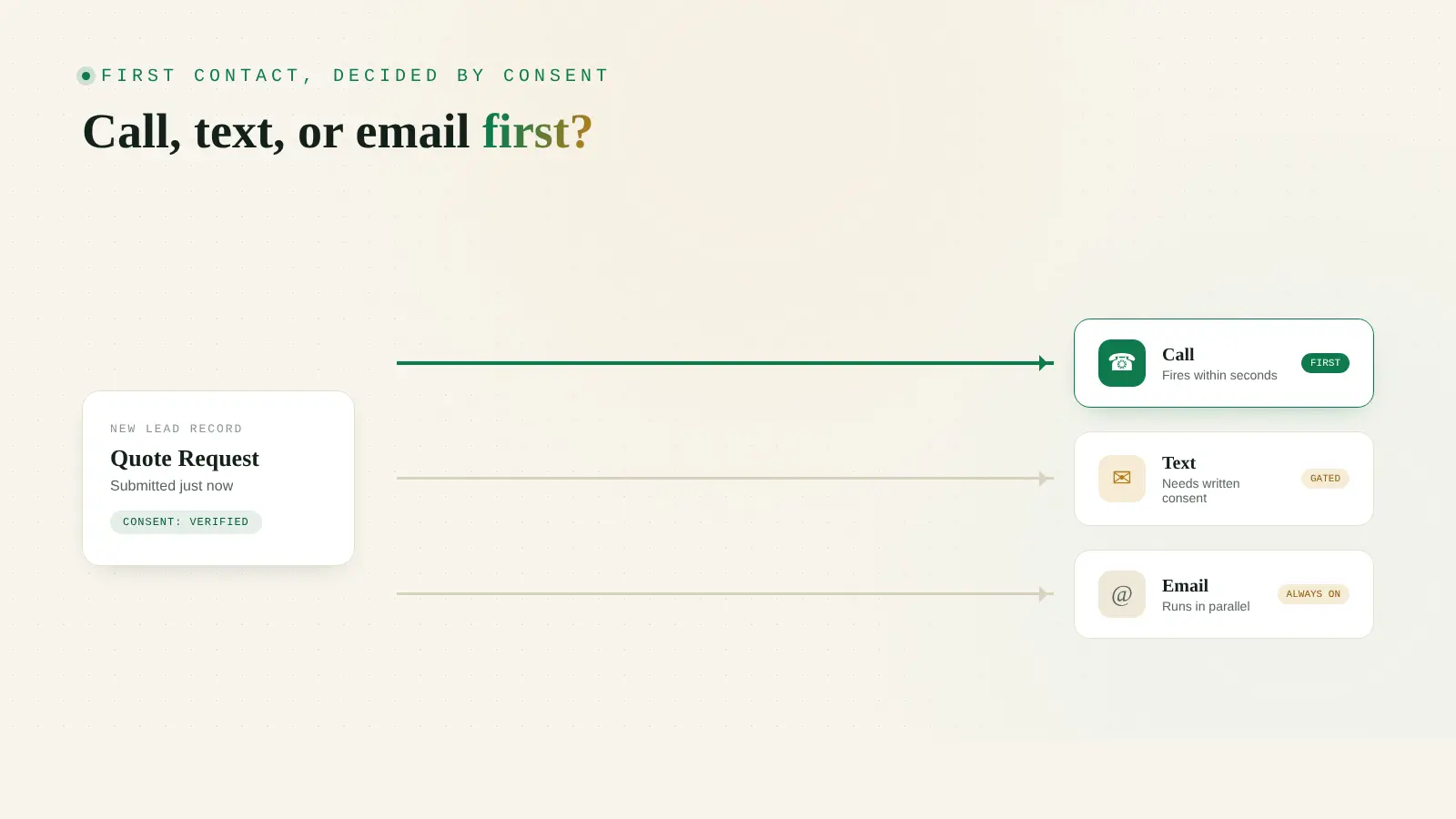
Should You Call, Text, or Email a New Insurance Lead First?
Calling and texting a new insurance lead trigger TCPA consent rules that email never does. Here's the legally compliant sequence that's also the fastest one.
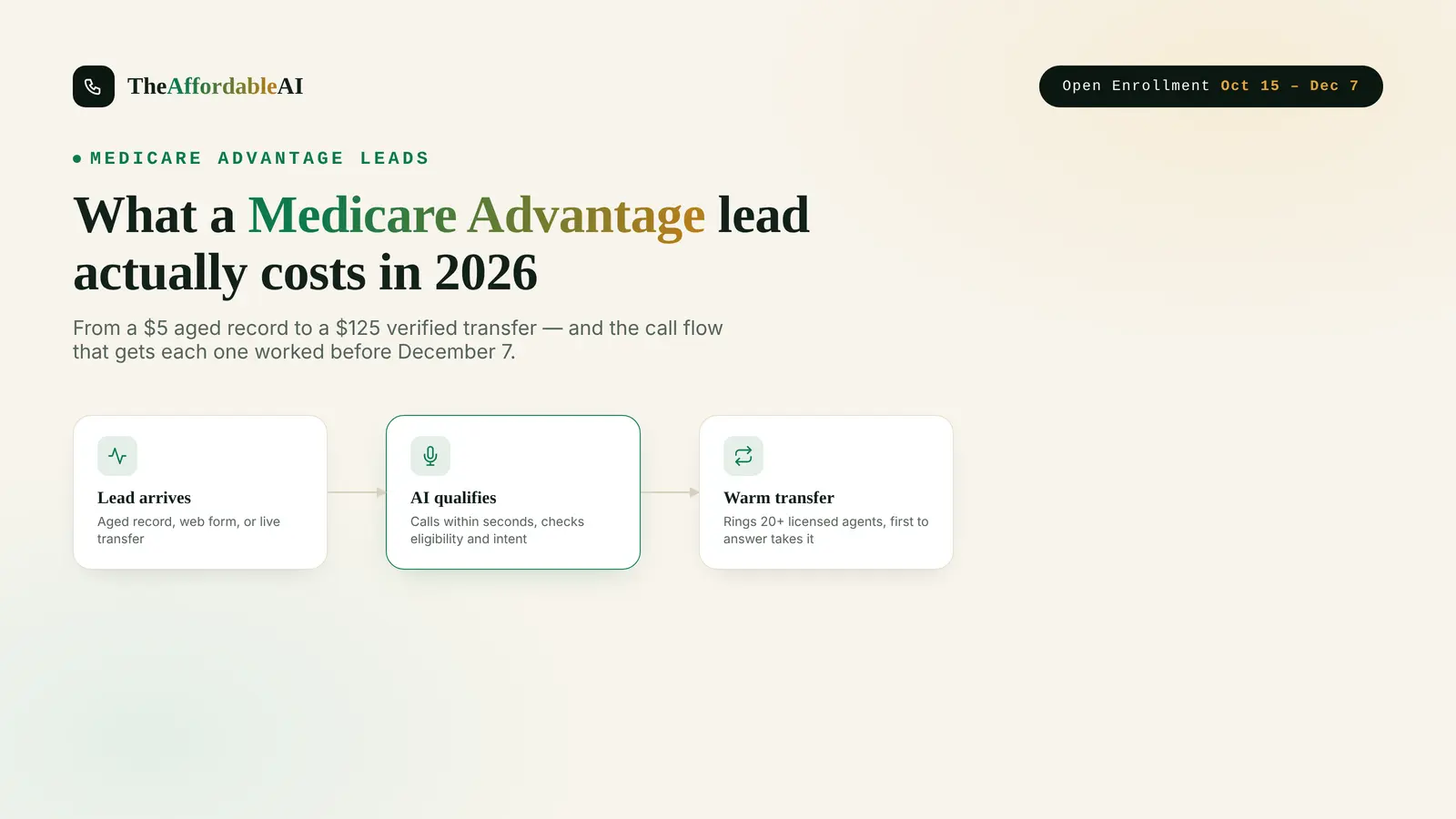
Medicare Advantage Leads in 2026: What They Cost
Medicare Advantage leads run $5 to $125 each, and Congress is scrutinizing how lead generators sell senior data. What they cost and how to follow up fast.